
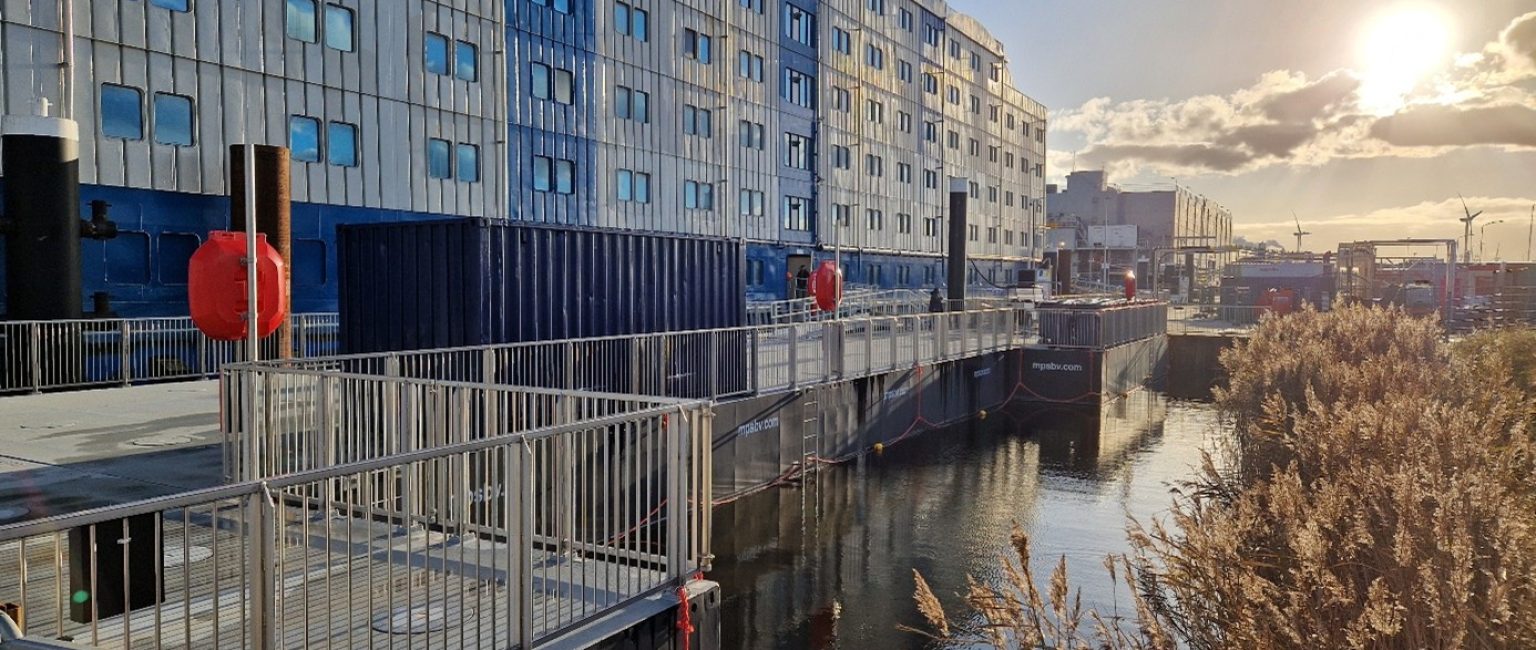
In 2024, the Central Agency for the Reception of Asylum Seekers (COA) decided to house asylum seekers on two large accommodation pontoons moored along the Gerrit Bolkade in Zaandam.
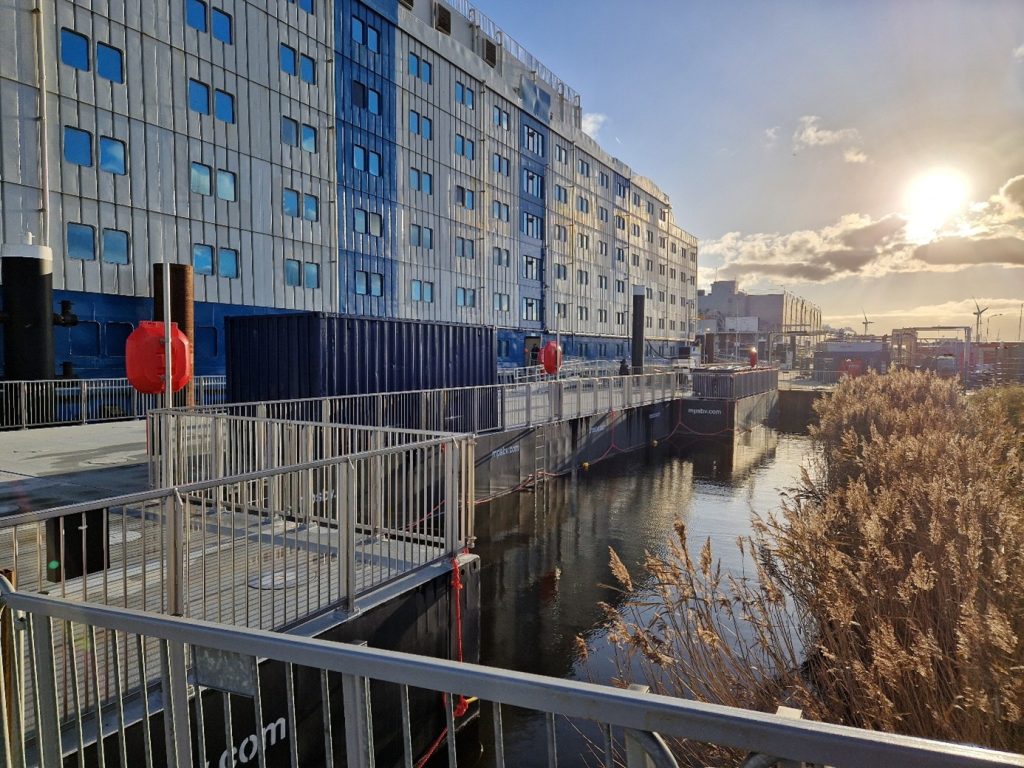
Due to the limited available quay space, Doggerland Offshore constructed a large floating jetty. This jetty runs parallel to the dike and is entirely built from large steel container pontoons. Additionally, two artificial islands were created between the pontoons: a recreational island serving as a meeting place and a cycling island designated as a parking area, which also includes a docking station for emergency services on the waterside.

Technical specifications
The total infrastructure covers approximately 4,100 m² and consists of:
- 127 pontoons of 40 ft (12.19 m long × 2.44 m wide × 1.98 m high)
- 26 pontoons of 20 ft (6.09 m long × 2.44 m wide × 1.98 m high)
- 19 spud poles
The pontoons are designed to support a load capacity of 6 tons per square meter, feature an anti-slip deck, and have a freeboard height of approximately 1.50 meters. They are securely moored using steel spud poles.
Safety measurements
To ensure maximum safety for residents, the pontoons are equipped with:
- Hundreds of meters of heavy-duty railing
- Continuous safety lines on the waterline
- Dozens of swimming ladders, fire extinguishers, and lifebuoys
- Transition plates between different pontoon sections to prevent tripping hazards
- Filling plugs covering all openings to prevent tripping hazards, such as container pontoon corners and manhole cover holes

Construction Process
The pontoons were delivered in phases from the MPS shipyard and temporarily stored at the former ADM site on the opposite side of the North Sea Canal. Once the new mooring piles in Zaandam were completed, all pontoons were connected in various configurations and prepared within approximately three weeks. They were then towed across the canal and moored in place.


A crane ship was used to install the spud poles. The inner poles, which were out of reach of the crane ship or a land-based crane, were placed using a telescopic crawler crane from the pontoons. On-site, railings and transition plates were installed.

Additional facilities such as access bridges, fire suppression pipelines, stair towers, elevators, lighting, and utility connections were installed by third-party contractors.